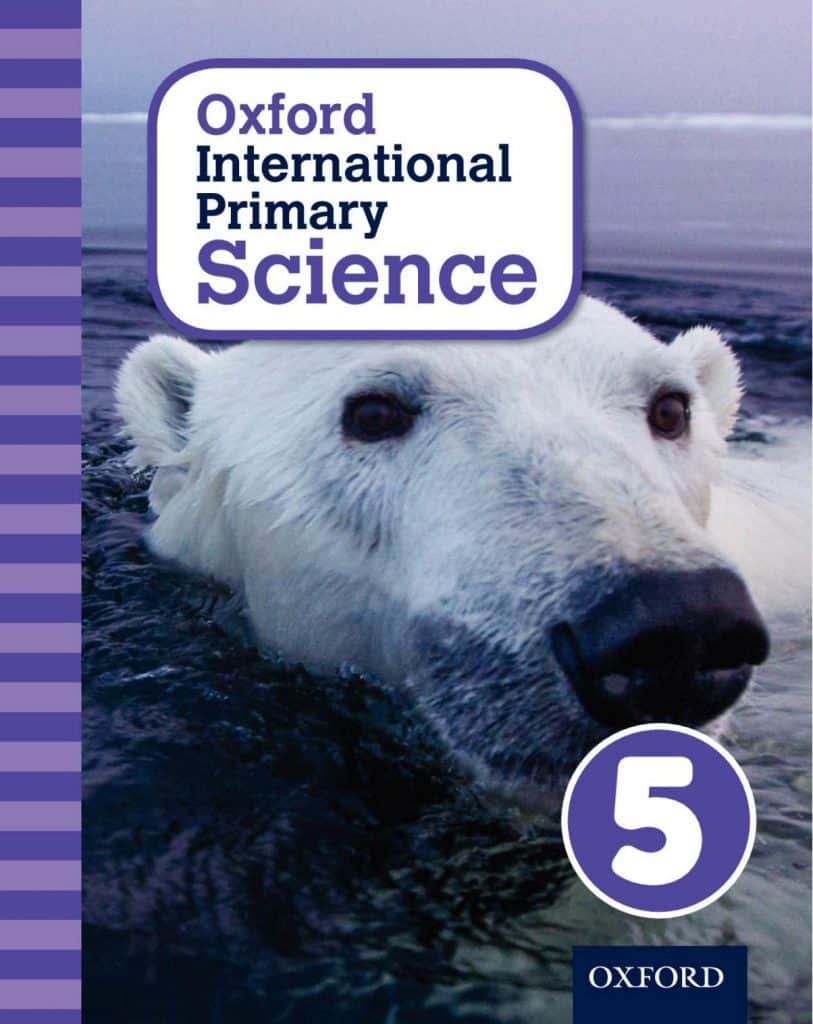
About This Book
Oxford Primary Science Student’s Book 5 is the fifth student’s book of the Oxford Primary Science course. The destination page is headed with this post’s exact title, and the file it serves, ‘Oxford International Primary Science Stage 5.pdf’, carries the same course and level in the fuller International form — the same volume under the filename the site serves it by. The book’s work is method: the primary scientist’s questions converted into investigations, with recording and fairness taught as the discipline’s core habits.
Science teaching lives or dies on a single distinction children must feel in their bones: the difference between looking and investigating. Looking collects impressions; investigating interrogates them — one variable changed, everything else held, results written down before memory can edit them. Book 5 of a serious primary science course is built at exactly that threshold, because the fifth stage’s minds are newly capable of the discipline’s founding patience: waiting for evidence instead of voting for answers. The student’s-book format matters here as the laboratory notebook’s ancestor — the place where predictions are committed before outcomes are known, which is the bravest act in all of science education. Teachers refereeing fair tests at this level are training more than technique; they are installing the intellectual honesty that every later laboratory, and frankly every later argument, will draw upon. Parents notice the change as a new domestic standard: claims at the dinner table now require demonstrations.
What Learners Will Practise
Questions Into Tests
Learners practise converting curiosity into investigable questions — the sharpening on which all method depends. A question that cannot be tested is a wish; this book teaches the difference kindly and early.
Fairness as Technique
The book practises changing one thing at a time and holding the rest — the fair test. Fairness in experiments is honesty made procedural, and it is learnable like any other craft.
Recording Before Knowing
Readers practise writing predictions and observations down before outcomes arrive. The written record is science’s memory, and it cannot be retroactively improved without someone noticing.
Key Features
The method-first design is the feature: investigation taught as the subject itself. The committed-prediction habit is the second — bravery in writing, before results — and the shelf fit the third, the investigation beside this list’s sixth book and the phonics summit. On this shelf it learns the method here.
Who This Book Is For
Fifth-stage primary scientists with hypotheses forming are its first audience. Teachers form its second readership, refereeing fair tests. Parents make its third, fielding demonstration-demanding questions.
How to Use This Book
Require the prediction in writing before every investigation; no retroactive ‘I knew that’. Praise the fairest test in the class, not the flashiest result — incentives teach what the subject values. Keep the student’s book as the lab record it is becoming: dated, honest, and never tidied after the fact.
Related Books
The sixth book stands at Oxford Primary Science Student’s Book 6, and the phonics commissioning volume at Oxford Phonics World Student’s Book 5.